Alliance leverages the two global automakers’ strengths to better compete, innovate and serve customers
Volkswagen AG and Ford Motor Company today announced the first formal agreements in a broad alliance that positions the companies to boost competitiveness and better serve customers in an era of rapid change in the industry.
Volkswagen CEO Dr. Herbert Diess and Ford CEO Jim Hackett confirmed that the companies intend to develop commercial vans and medium-sized pickups for global markets beginning as early as 2022. The alliance will drive significant scale and efficiencies and enable both companies to share investments in vehicle architectures that deliver distinct capabilities and technologies.
The companies estimate the commercial van and pickup cooperation will yield improved annual pre-tax operating results, starting in 2023.
In addition, Volkswagen and Ford have signed a memorandum of understanding to investigate collaboration on autonomous vehicles, mobility services and electric vehicles and have started to explore opportunities. Both companies also said they were open to considering additional vehicle programs in the future. The teams will continue working through details in the coming months.
“Over time, this alliance will help both companies create value and meet the needs of our customers and society,” Hackett said. “It will not only drive significant efficiencies and help both companies improve their fitness, but also gives us the opportunity to collaborate on shaping the next era of mobility.”
Diess added: “Volkswagen and Ford will harness our collective resources, innovation capabilities and complementary market positions to even better serve millions of customers around the world. At the same time, the alliance will be a cornerstone for our drive to improve competitiveness.”
The alliance, which does not entail cross-ownership between the two companies, will be governed by a joint committee. This committee will be led by Hackett and Diess and will include senior executives from both companies.
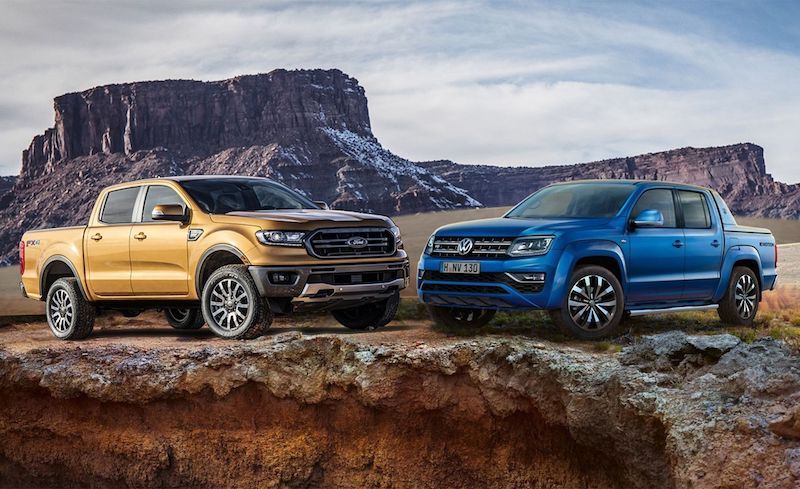
Ford and Volkswagen both have strong commercial van and pickup businesses around the globe, with popular nameplates such as the Ford Transit family and Ranger as well as the Volkswagen Transporter, Caddy and Amarok.
The companies’ collective light commercial vehicle volumes from 2018 totalled approximately 1.2 million units globally, which could represent the industry’s highest-volume collaboration as production scales.
Demand for both medium pickups and commercial vans is expected to grow globally in the next five years. The alliance will enable the companies to share development costs, leverage their respective manufacturing capacity, boost the capability and competitiveness of their vehicles and deliver cost efficiencies, while maintaining distinct brand characteristics.
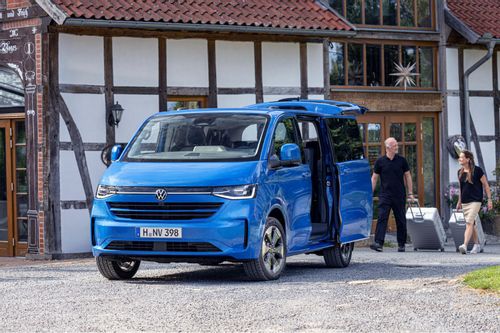
Through the alliance, Ford will engineer and build medium-sized pickups for both companies which are expected to go to market as early as 2022. For both parties, Ford intends to engineer and build larger commercial vans for European customers, and Volkswagen intends to develop and build a city van.
Also worth a look: the Volkswagen Golf and the Volkswagen Touareg.
FAQ
Q: What is the Ford and Volkswagen alliance about?
The Ford and Volkswagen alliance is a broad partnership that lets both companies share development costs and resources for commercial vans, medium-sized pickups, and potentially autonomous and electric vehicles starting from 2022, without either company owning shares in the other.
Q: Will this alliance affect vehicle prices in South Africa?
The alliance should help reduce vehicle prices in South Africa over time because shared development costs and improved efficiencies typically get passed on to consumers, though specific pricing impacts won't be visible until the first joint vehicles arrive in 2022.
Q: Which vehicles will be developed through the Ford Volkswagen partnership?
The partnership will initially focus on commercial vans and medium-sized pickups for global markets starting in 2022, with both companies exploring collaboration on autonomous vehicles, mobility services, and electric vehicles for future development.
Q: Does this mean Ford will own part of Volkswagen or vice versa?
No, the Ford and Volkswagen alliance specifically does not involve any cross-ownership between the companies, it's purely a collaborative partnership to share resources and development costs while maintaining their separate identities.
Should You Buy It?
This alliance isn't about buying a specific vehicle right now, but it's brilliant news for South African buyers who should definitely wait for the joint vehicles arriving from 2022. The partnership means better value commercial vans and pickups with shared engineering costs, plus faster development of electric and autonomous tech that SA desperately needs. If you're in the market for a commercial vehicle, hold off until 2022 when these alliance vehicles hit our shores with better features at competitive prices thanks to the shared development costs.