2024 Budget: Fuel Levies Unchanged, Carbon Tax Up
In a concerted effort to address the economic pressures faced by South Africans, Finance Minister Enoch Godongwana has strategically navigated through the 2024 Budget by leaving the fuel levies unchanged while slightly adjusting the carbon tax. This approach underscores the government's acute awareness of the high cost of living and the cascading impact of fuel prices on essential sectors such as food and transportation.
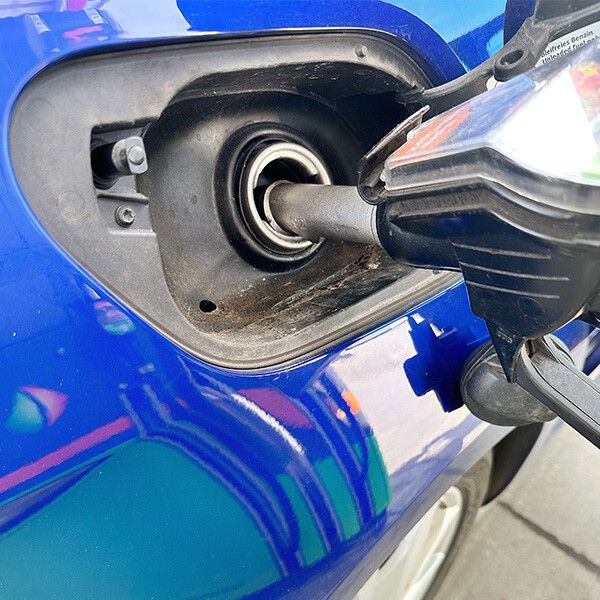
During his much-anticipated Budget Speech, Godongwana announced that there would be no increases to the General Fuel Levy (GFL) and the Road Accident Fund (RAF) levy for the financial year 2024/25, maintaining them at R6.13 per litre for both petrol and diesel. This decision translates to an estimated tax relief of around R4 billion, effectively putting money back into consumers' pockets at a time when financial relief is sorely needed.
In 2022, amidst significant fuel price increases, the government temporarily reduced the GFL by R1.50 per litre between April and July to alleviate the consumer burden. Although these rates reverted to their original levels in August of the same year, they have since remained stable, providing a measure of predictability in an otherwise volatile economic landscape.
However, to further the country's environmental commitments, the carbon fuel levy will see a minor increase, from 10 cents to 11 cents per litre for petrol and 11 cents to 14 cents for diesel, starting April 3, 2024. Additionally, the Finance Minister indicated plans to release a discussion paper later in the year to solicit public input on the second phase of the carbon tax. This move aligns with global trends towards more sustainable and eco-friendly policies.
Despite these adjustments, South Africans are bracing for a significant surge in fuel prices in March 2024, driven by rising international product prices and a weak Rand. Mid-month data from the Central Energy Fund, analyzed by the Automobile Association (AA), signals a potential climb in fuel prices to exceed R24 per litre for both grades of petrol, nudging close to the record high of R25 per litre witnessed last year.
Godongwana's delicate balancing act in the 2024 Budget—holding steady on fuel levies while making a nominal increase in the carbon tax—reflects a nuanced response to the complex interplay of economic, environmental, and social factors impacting South Africans today. The government's decision to forego additional revenue from fuel levies to ease the cost of living demonstrates a prioritization of immediate consumer relief over fiscal gains amidst concerns over fuel prices' broader economic implications.
FAQ
Q: How much will the fuel levy increases cost me per month in South Africa?
The good news is that fuel levies are staying exactly the same at R6.13 per litre for both petrol and diesel, but the small carbon tax bump means you'll pay an extra 1 cent per litre for petrol and 3 cents per litre for diesel from April 2024. If you fill up 200 litres monthly, that's only an additional R2 to R6 per month, which is basically the cost of a packet of chips.
Q: Why are fuel prices still going up if the government didn't increase levies?
The fuel levy freeze saves you about R4 billion collectively, but international oil prices and our weak Rand are the real villains pushing prices up in March 2024. The government controls the taxes but can't control global markets or currency fluctuations, so even with unchanged levies, pump prices still dance to the international tune.
Q: What is the carbon tax increase and how does it affect fuel prices?
The carbon fuel levy is jumping from 10 cents to 11 cents per litre for petrol, and from 11 cents to 14 cents per litre for diesel starting April 3, 2024. This tiny increase is part of South Africa's environmental commitments, and frankly, it's such a small amount that you'll barely notice it compared to the bigger economic forces affecting fuel prices.
Q: Is this fuel levy freeze a good thing for the South African economy?
Absolutely, this R4 billion tax relief keeps money in your pocket when you desperately need it, especially since fuel price increases hit everything from bread prices to taxi fares. The government clearly recognises that South Africans are already stretched thin, and avoiding extra tax burden on fuel is probably the smartest move they could make right now.
Q: When will the second phase of carbon tax come into effect?
The Finance Minister plans to release a discussion paper later in 2024 to get public input on phase two of the carbon tax, but there's no specific date yet. This means you'll have a chance to voice your opinion before any major changes hit your wallet, which is refreshing considering how these things usually work.
Should You Buy It?
This isn't about buying a specific vehicle, but rather understanding the fuel cost landscape for 2024. The unchanged fuel levies are brilliant news for your wallet, saving South African motorists an estimated R4 billion collectively. With the General Fuel Levy staying at R6.13 per litre for both petrol and diesel, and the Road Accident Fund levy unchanged, you're looking at significant savings compared to potential increases. The minor carbon tax bump (1 cent for petrol, 3 cents for diesel) is negligible compared to the relief from frozen levies. If you're considering buying any vehicle in 2024, factor in that fuel costs will remain more predictable thanks to these unchanged levies, though brace yourself for March price hikes due to international factors. The bottom line: Government has thrown motorists a financial lifeline by keeping fuel levies steady, making 2024 a better year to own and operate any vehicle in South Africa.