



5 things that we love about the new Suzuki Baleno
Suzuki recently outsold a lot of its competition which is a massive milestone for the little brand. With quality products, a decent dealer network and a team that believes in the brand, Suzuki is on a positive trajectory. Fitting then that they decided to introduce the latest Baleno, unfortunately, Toyota decided to introduce the new Starlet, a car based on the Baleno. Regardless, here are 5 things that we love about the Baleno.
Design
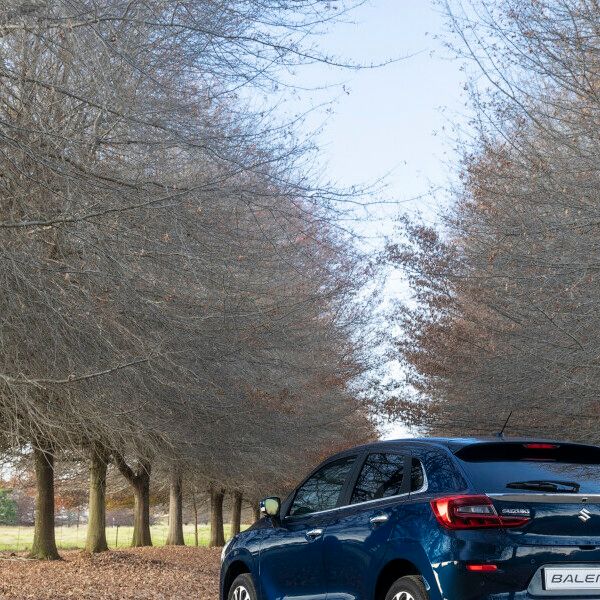
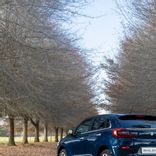
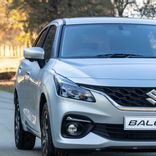
Many of this design language’s foundational elements, such as the mix of organic and dynamic lines, large and striking lights and a purposeful stance, are a refinement of the Liquid Flow philosophy that was seen on the previous Baleno. The Suzuki designers then added new design elements, including a wider front air intake, a three-dimensional grille design and flowing body lines that connect with the chrome brightwork in one continuous swoop, that not only create a fresh new look for the Baleno, but also signals what is to come for other Suzuki models.
Enhanced specification
For the all-new model, Suzuki has added even more specifications to both the GL and GLX range. Most importantly, the boost in specifications was not only kept for the GLX model. In the Suzuki Baleno GL manual and automatic versions, Suzuki has added climate control with rear air vents instead of the previously used air conditioning system. The vents are mounted at the back of the new centre armrest with a storage box between the front occupants.
Technology and features
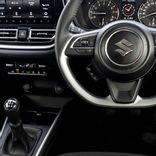
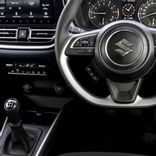
Other standard features on the GL model include remote central locking, rear parking sensors, a 12V accessory socket and of course the much-loved 7” full-colour Suzuki infotainment system with Bluetooth connectivity. The infotainment system will display information from the in-built reverse camera, and it has Apple CarPlay and Android Auto built in. The system can be controlled from the controls on the leather-clad steering wheel.
In the Suzuki Baleno GLX, the number of luxuries is boosted to a level previously unheard of in this segment including first-in-segment features such as a head-up display, a full 360-degree Round View Monitor with side, front and rear-mounted cameras that display a bird’s eye view of the vehicle’s surroundings when parking or manoeuvring at low speeds. The new Head-Up Display offers an array of information from a pop-up screen than neatly retracts into the dashboard when not used.The 7” infotainment system found in the Baleno GL models is further replaced with a high-resolution 9” system with Apple CarPlay and Android Auto. The system also has added Smart Vehicle Alerts and of course Bluetooth connectivity with steering controls.
More power
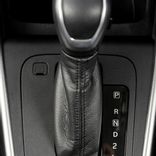
Apart from the additional luxuries, Suzuki has also replaced the 1.4 litre petrol engine of the previous-generation Baleno with a new 1.5-litre unit. This engine, which is also used in the Suzuki-built Toyota Starlet, Urban Cruiser and Rumion, and in Suzuki models such as the Jimny and Ertiga delivers a sprightly 77kW and 138Nm of torque. The Baleno has an average fuel consumption rating of 5.4l/100km for the five-speed manual transmission models and 5.7l/100km in the four-speed automatic transmission models.
Safety for the whole family
Safety and security in the GL specification level are also very well taken care of with dual front airbags, electronic stability programme, ISOFIX child seat anchors, and an alarm and immobilizer as standard. Hill Hold Assistance is also standard on the Baleno, starting at the entry-level GL specification. To add to the already high safety credentials of the Baleno GL, Suzuki has added four more airbags (front side airbags and full-length curtain airbags) for a total of six. GLX buyers also receive privacy glass as standard, and the rear-view mirror dims automatically.
Also worth a look: the Suzuki Swift and the Suzuki Starts 2025 with Record-Breaking Sales in South Afric.
FAQ
Q: What does the Suzuki Baleno cost in South Africa?
The Suzuki Baleno GL manual starts at R304,900, while the GLX automatic will set you back around R389,900, making it one of the most affordable hatchbacks in its class with decent kit levels.
Q: Is the Suzuki Baleno worth buying over the Toyota Starlet?
The Baleno offers better build quality and more standard features than the Starlet, plus you get Suzuki's solid reliability record and a 5-year/200,000km warranty that beats Toyota's offering.
Q: What engine does the new Suzuki Baleno have?
The Baleno runs a 1.4-litre naturally aspirated petrol engine producing 68kW and 130Nm of torque, paired with either a 5-speed manual or 4-speed automatic transmission.
Q: How fuel efficient is the Suzuki Baleno?
Suzuki claims the Baleno delivers around 5.2 litres per 100km for the manual and 5.8 litres per 100km for the automatic, which makes it brilliant for daily commuting and weekend getaways.
Q: Does the Suzuki Baleno come with a warranty in South Africa?
Yes, Suzuki backs the Baleno with a comprehensive 5-year/200,000km mechanical warranty plus a 2-year/30,000km service plan, giving you proper peace of mind.
Should You Buy It?
The best budget hatchback under R400,000 in SA is definitely the Suzuki Baleno GLX at R389,900. With climate control, Apple CarPlay, a reverse camera and Suzuki's bulletproof reliability, it offers more bang for your buck than the Toyota Starlet or Nissan Almera. The GL manual at R304,900 is an absolute steal if you can live with the manual gearbox. Buy it, you won't regret it.