There was a time when you wouldn’t be seen dead in a Korean car. Fortunately, times change, and by simply looking at the amount of Hyundai’s on our roads, it’s fair to say that the automaker is easily one of the fastest growing and strongest brands in the world.
This is illustrated by the recent Interbrand's Best Global Brands valuation that listed Hyundai as the 6th most valuable automotive brand on the planet, ahead of automakers like Porsche, Volkswagen, Chevrolet, Nissan, Audi and Landrover to name just a few.
This is attributed to quality product that Hyundai continually churns out, with their latest offering being the Kona compact crossover that debuts in South Africa later this month.
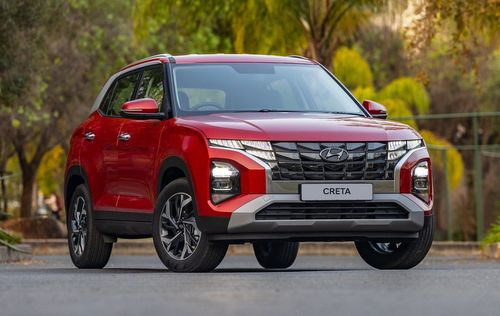
You might be asking, “Doesn’t Hyundai already have the Creta in that segment?” And you would be accurate in that deduction. However, the dynamic and daring Kona is very different to the rather uninspiring Creta.
The Kona, which is named after a district in Hawaii and is based on the i30, is actually a little smaller (105mm shorter) than the Creta, and a little more upmarket in its approach, and will rival the Renault Captur, the Mazda CX-3, the Nissan Juke and the Peugeot 2008 when it launches shortly.
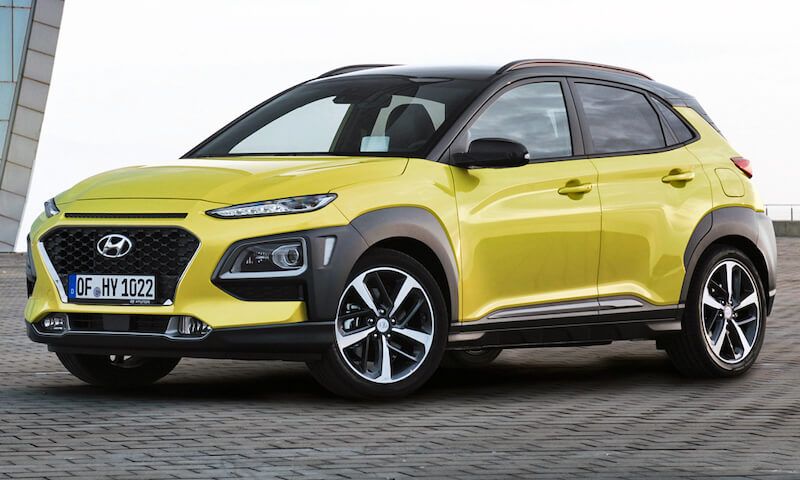
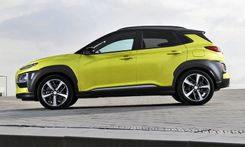
Much like the equally trendy Toyota C-HR it features bold styling, with futuristic touches like its slit-eyed DRLs, which are separated from the headlights. There is extensive black cladding throughout, emphasizing its 'SUV-like' capabilities. There's also an optional bi-colour paint scheme, which makes it stand out further. The styling is either a 'love or hate' thing, but based on the success of the Juke, it's likely to be well received locally.
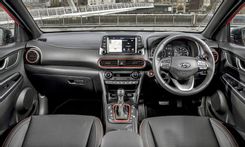
The interior is a lot more restrained, and features a split-level dashboard with a 7-inch floating touchscreen media system. This infotainment system has Apple CarPlay and Android Auto functionality. Loading space is average at 361 litres, although this expands to 1143 litres of space with the rear seats dropped down. Other standard kit includes a manual air conditioner, cruise control, heated side mirrors, keyless entry and Bluetooth to name just a few.
In terms of safety, it scored a stellar 5-star rating in Euro NCAP tests, and comes standard with park assist and a rear camera, six airbags, ISOFIX seats, Blind Spot Detection, Rear Cross Traffic Alert, a tyre pressure monitor, front and rear fog lights, and the usual combination of ABS, ESP, HAC & DBC.
South Africa will get two variants of the Kona, with both being front-wheel drive. There is a 1.0-litre 3-cylinder turbo petrol engine which produces 88kw and 172nm paired with a 6-speed manual transmission, and a naturally aspirated 2.0-litre four-cylinder petrol engine that makes 110kw and 180nm which will be available only with an automatic transmission.
It’s available in four basic colours – Chalk White, Lake Silver, Pulse Red and Dark Knight paired with a black and red trimmed interior. There is also the rather special hue, called Acid Yellow, and this is available only with a black and lime colour themed cabin.
The Kona is priced at R379 900 for the Kona 1.0 TDGi Executive, and R399 900 for the Kona 2.0 Executive. A seven-year/200 000 km warranty and five-year/90 000 km service plan are expected to come standard.
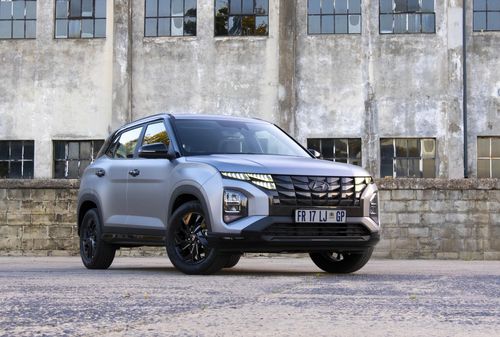
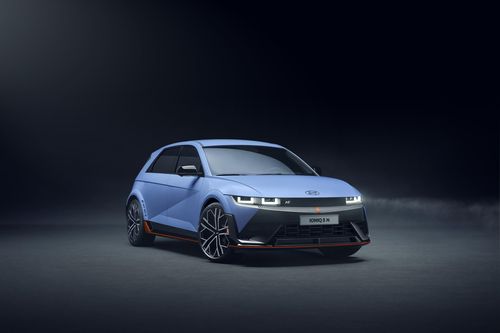
Also worth a look: the Hyundai Creta: Matte Edition Headlines 2024 Refresh and the IONIQ 5 N Wins TopGear's 2023 Car of the Year.
FAQ
Q: What does the Hyundai Kona cost in South Africa?
The Hyundai Kona starts from around R419,900 for the base 1.0T Executive model, while the range-topping 2.0 Executive Auto sits at approximately R499,900, making it competitively priced against rivals like the Nissan Juke and Renault Captur.
Q: Is the Hyundai Kona worth buying?
The Kona is definitely worth considering if you want a stylish compact crossover with decent tech and Hyundai's excellent warranty, though its bold styling might not appeal to everyone and the 361-litre boot space is fairly average for the segment.
Q: What engine options are available in the Hyundai Kona?
The South African Kona lineup includes a 1.0-litre turbocharged three-cylinder engine producing 88kW and a larger 2.0-litre naturally aspirated four-cylinder engine with 110kW, both offering decent performance for daily driving.
Q: How does the Hyundai Kona compare to the Toyota C-HR?
Both the Kona and C-HR feature bold, polarising styling and similar compact crossover proportions, but the Kona offers better value for money, more practical interior space, and superior infotainment technology with Apple CarPlay and Android Auto as standard.
Q: What warranty does Hyundai offer on the Kona?
Hyundai backs the Kona with their impressive 7-year/200,000km warranty package, which is significantly longer than most competitors and includes roadside assistance, giving buyers excellent peace of mind.
Should You Buy It?
The best compact crossover under R500,000 in South Africa is definitely the Hyundai Kona, and yes, you should absolutely buy it. Starting at R419,900, it offers bold styling that makes the Nissan Juke look conservative, proper tech with Apple CarPlay and Android Auto, and that unbeatable 7-year warranty that puts German rivals to shame. Sure, the 361-litre boot isn't massive and the styling might scare your conservative uncle, but if you want to stand out in the school parking lot without breaking the bank, the Kona delivers the goods with typical Hyundai reliability thrown in for good measure.